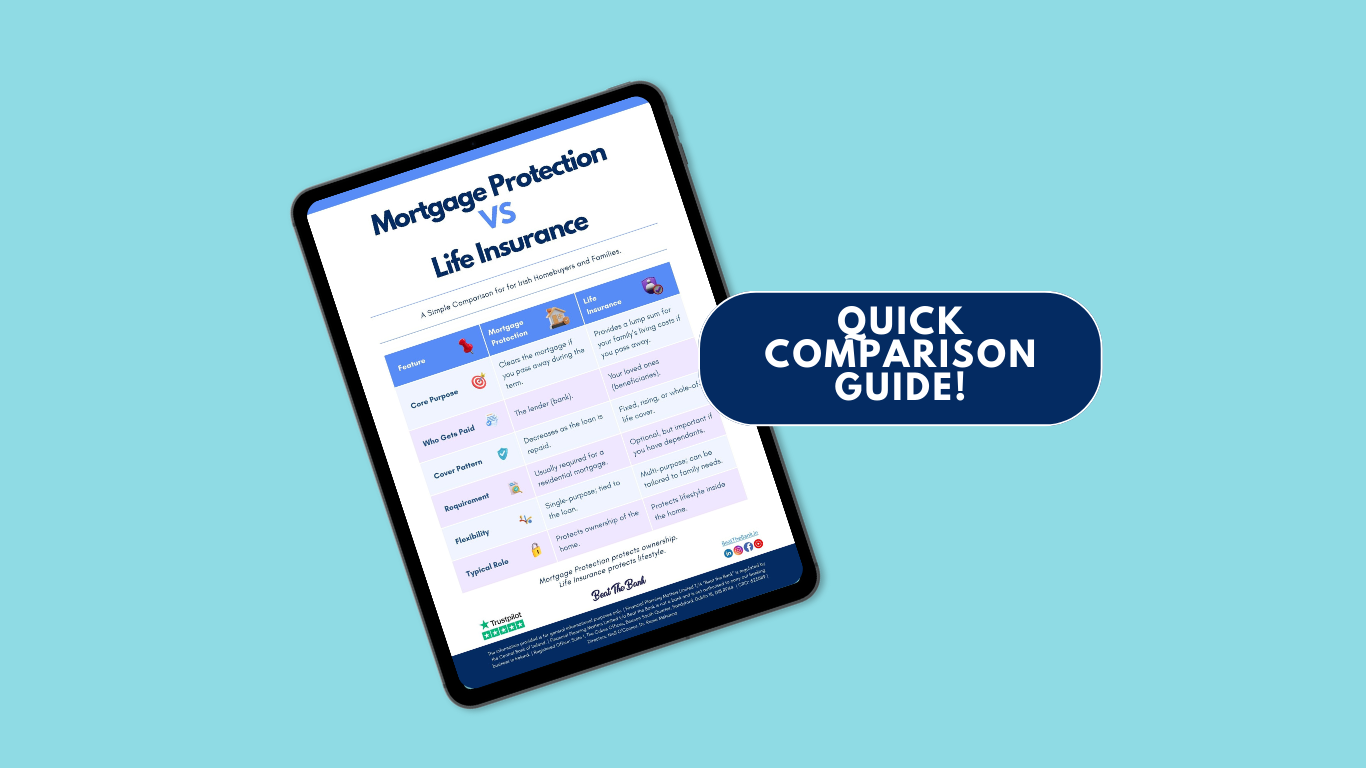
Mortgage Protection and Life Insurance: What’s the Difference?

Being self-employed in Ireland gives you independence and flexibility – but it also means you don’t have the same safety net as PAYE workers. One of the biggest gaps is around social welfare supports, and it all comes down to the type of PRSI contributions you pay.
If you’re self-employed in Ireland, you’re almost certainly paying Class S PRSI contributions. These contributions cover you for a limited set of benefits, including:
🔹State Pension (Contributory) – once you’ve enough contributions built up.
🔹Maternity Benefit and Paternity Benefit.
🔹Jobseeker’s Benefit (Self-Employed) – introduced in recent years.
That’s the good news. The not-so-good news is what’s not covered. Class S PRSI doesn’t include Illness Benefit or other short-term supports.
So if you can’t work due to illness or injury, the State won’t step in with weekly payments the way it would for PAYE workers. For many self-employed in Ireland, that means your income could stop overnight.
👉 Read more about Class S PRSI on Citizens Information.
Without Illness Benefit, those who are self-employed in Ireland need to create their own safety net. That’s exactly what Income Protection insurance does.
With Income Protection in place:
🔹You can insure up to 75% of your income (less State Illness Benefit – which doesn’t apply for self-employed).
🔹Payments begin after a deferred period (often 13 or 26 weeks).
🔹Cover continues until you’re able to return to work or until your chosen retirement age.
🔹It ensures you can still cover mortgage payments, bills, and day-to-day living costs.
For the self-employed in Ireland, it’s not just insurance – it’s financial peace of mind.
One big advantage of Income Protection is that premiums are tax deductible in Ireland.
That means you can claim tax relief at your marginal rate, reducing the real cost of cover. For example, if your premium is €100 per month and you pay income tax at 40%, your net cost is just €60.
This makes Income Protection one of the most tax-efficient ways for those self-employed in Ireland to protect their income.
Relying on your Class S PRSI contributions alone isn’t enough if you’re self-employed in Ireland. While it can cover state pension contributions and certain family supports if you meet the requirements, it won’t replace your income if you’re unable to work.
That’s why Income Protection is so important – and with tax relief available, it’s more affordable than most people think.
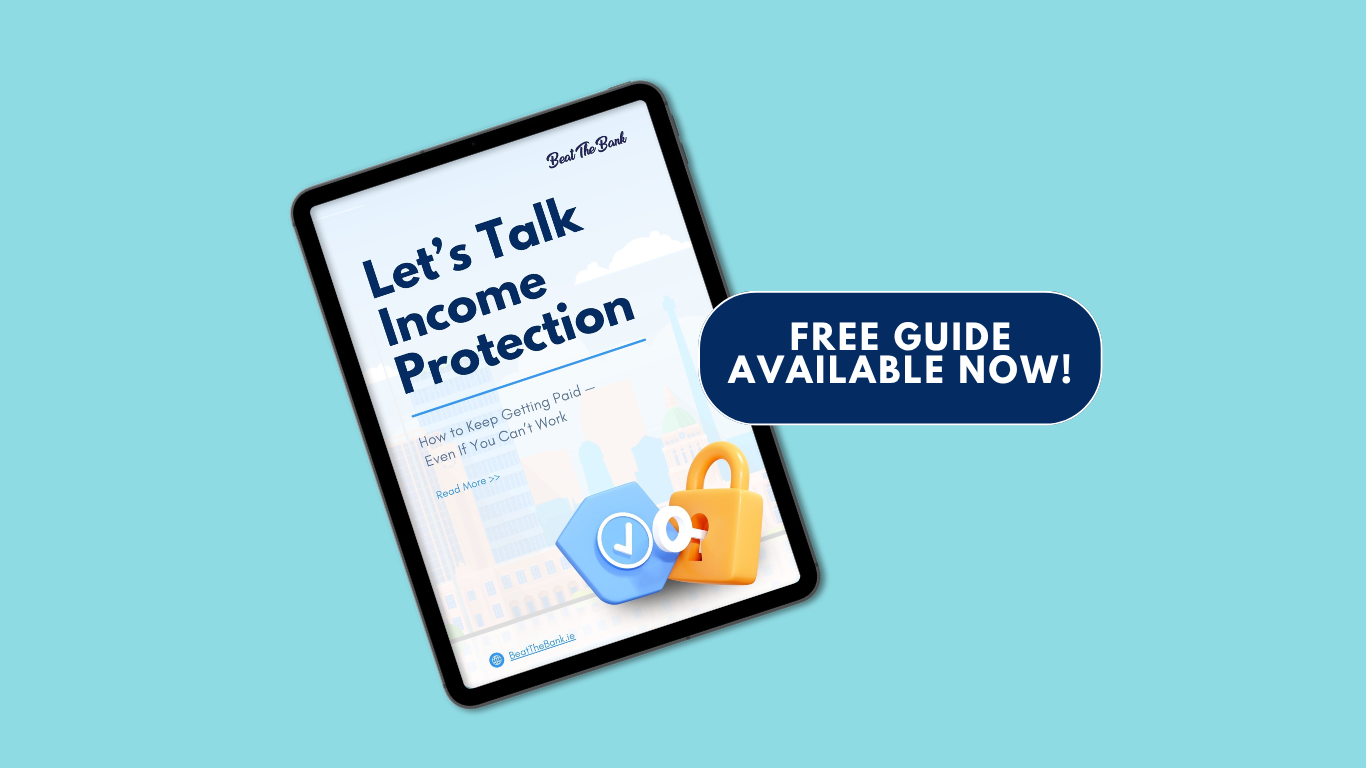
We’ve also put together a short, easy-to-read guide on Income Protection, which you can view or download here to learn more.
You have two choices:
1️⃣ Ignore it and hope you never get sick or injured.
2️⃣ Get an instant quote at BeatTheBank.ie today, and secure your financial future.
📖 Read more helpful information on our Learn page
📱 Follow us on Instagram, LinkedIn and Youtube for more useful tips
When it comes to smoking and vaping life insurance in Ireland, most people think it’s all about cigarettes. But insurers take a much stricter view.
If you’ve used any nicotine in the last 12 months – whether from vaping, snus, nicotine pouches, or even gum – you’re classed as a smoker. And yes, that smoker status can increase your life insurance, mortgage protection, or income protection premiums.
We asked Sharon Doyle, Director of Operations at Beat The Bank, to explain:
🔹What insurers in Ireland count as smoking
🔹 Why honesty matters when applying for cover
🔹How it could impact your premium – and a claim down the line
In Ireland, life insurance providers apply a strict definition:
Any nicotine use in the last 12 months = smoker status.
That includes:
🔹Tobacco products — cigarettes, rollies, cigars, snus
🔹Vapes and e-cigarettes
🔹Nicotine pouches
🔹Nicotine patches, sprays, or gum (nicotine replacement therapy)
It doesn’t matter if you vape socially, tried snus on a trip abroad, or had a single cigarette at a wedding. Even one-off nicotine use puts you into the smoker category for insurance purposes.
It’s never worth claiming to be a non-smoker if you’ve used nicotine in the last year. Insurers can check your history, and if nicotine use is found during a claim, it could lead to complications with your cover.
Want to see the full breakdown of what counts as smoking for life insurance in Ireland?
Click here to open the full guide on Smoking and Vaping (PDF)
🔹A clear definition of smoker status
🔹How occasional use affects your policy
🔹What to do if you’ve quit
🔹How to make sure you’re not overpaying
When it comes to smoking and vaping life insurance in Ireland, even occasional nicotine use – from cigarettes, vapes, snus, or pouches – can affect your premiums.
If you’ve been nicotine-free for a year, it’s worth checking whether you can move to non-smoker rates and save money on your cover.
📩 Contact us today at unbeaten@beatthebank.ie
📍 Compare quotes instantly at BeatTheBank.ie
📖 Read more helpful information on our Learn page
📱 Follow us on Instagram, LinkedIn and Youtube for more helpful tips
With mortgage interest rates coming down, more homeowners in Ireland are looking at ways to secure a better mortgage deal. Whether that means changing lender, shortening your term, or restructuring your loan, there’s one detail that’s easy to overlook- switching mortgage protection as well.
We asked Sharon Doyle, Director of Operations at Beat The Bank, to explain when a review is necessary and how it can put money back in your pocket — even if you’re not moving your mortgage at all.
When you change lender or alter your mortgage term or amount, you’ll usually need a new mortgage protection policy to match. That’s because your cover is directly linked to your loan balance and repayment term.
What many people don’t realise is that you’re not tied to the lender’s own policy. In Ireland, you’re free to shop around — and in many cases, independent policies offer better benefits and lower premiums than the bank’s default option.
As Sharon points out, reviewing your cover isn’t just for those switching mortgages. Policies issued years ago, especially through banks, may lack valuable features that are now standard with many insurers.
By checking what’s on the market today, you could find:
🔹Lower monthly premiums for the same or better cover
🔹 Dual life cover, which pays out on each life assured rather than just once
🔹Extra benefits like digital doctor services, and much more.
These upgrades can make a real difference to your family’s financial protection — often at no extra cost.
If you’re thinking about switching or updating your mortgage protection, here’s how to make it a smooth process:
Have your new policy approved before cancelling your old one – this avoids any gap in cover.
Compare more than just the price – look at benefits, claim terms, and any built-in extras.
Check your lender’s requirements – your new policy must match your loan amount and term.
Be ready for health questions – switching can mean new medical underwriting, but it’s quick for most people and worth it for the savings.
At Beat The Bank, we compare policies from Ireland’s leading insurers to deliver the right combination of cover, benefits, and value for your situation.
Our advice is simple: even if you think your policy is fine, it’s worth taking a few minutes to check. The savings – or the extra cover – could surprise you.
You can get a mortgage protection quote in seconds at beatthebank.ie and see instantly how much you might save.
Ready to review your policy? Get started today and make sure you’re getting the best value and protection available.
📖 Read more helpful information on our Learn page
📱 Follow us on Instagram, LinkedIn and Youtube for more helpful tips
We insure our homes, cars and phones without thinking twice, but we rarely protect the income that makes everything else possible. Many people in Ireland assume they’ll always be able to work, yet illness or injury can interrupt your earnings for months or even years.
Income protection is an insurance policy that steps in if you can’t work, providing a regular payment of up to 75 % of your salary until you recover.
➡ Click here to open “The Importance of Income Protection” eBook (PDF)
This short, easy‑to‑read guide explains:
🔹Who can take out an income protection policy and how it works in practice
🔹Why relying on the State benefit of €244 per week could leave a large gap in your finances
🔹How to choose a deferred period that aligns with any employer sick‑pay scheme
🔹What factors affect the cost and how tax relief makes premiums more affordable than you might expect
Whether you’re employed or self‑employed, if you depend on your monthly wage to pay your mortgage, rent or childcare, this is well worth five minutes of your time. Get up to speed with our latest guide, and see how income protection can keep your financial plans on track.
➡ Click here to open “The Importance of Income Protection” eBook (PDF)
📖 Read more helpful information on our Learn page
📱 Follow us on Instagram, LinkedIn and Youtube for more useful tips